“But where are the snows of yesteryear?” — François Villon
The title of this piece is appropriated from a Jimmy Buffett album and song released in 1974 – fifty years ago. Which also was when I was born, on the twentieth of June that year in a nondescript old hospital in a nondescript old suburb west of Cleveland. A Gemini Gen X baby, born in the final weeks of Nixon’s presidency and while doomed South Vietnam was still on the map. Warning signs of what was to come for me, I suppose.
Fifty. Wow. Whoa. WTF? That number’s a real motherfucker when I look at it on pixelated paper. Jesus. The voice inside my head, the so-called internal monologue, remains an idiot sixteen year old from 1990. Who’s this gray-haired man in the mirror whose skin is starting to get age spots on his face? Fifty? GTFO of here.
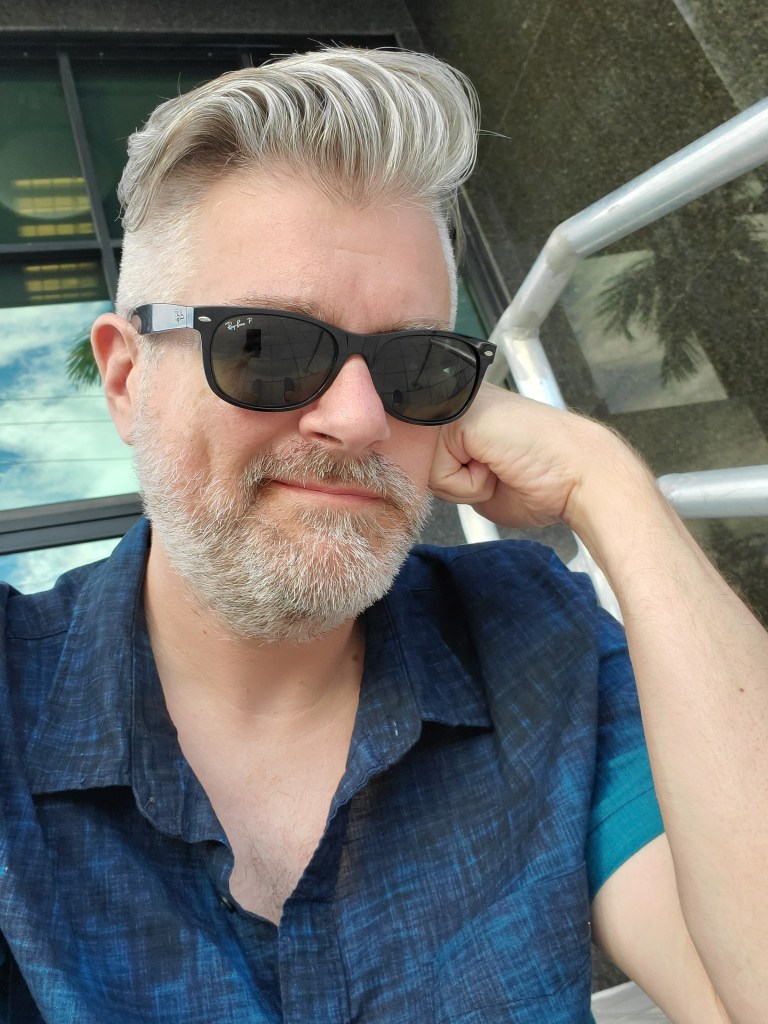
And yes, I know I’m fortunate to still have all of my hair regardless of its color. I appreciate that fact, and that it’s the only part of me that has ever gotten random compliments from strangers. The hair is part of the zaddy era, I’m told. So be it. Everything below my hairline is the Fall of Rome, anyway.
Now, onto the profound observations about turning fifty.
[Presses finger to earpiece, eyes narrowing and looking hard into the distance]: “Just a moment … I’m now being told we don’t actually have any insightful reflections on reaching a half century. Just some long-winded bullshit. Back to you, Ron.”
I’d originally written a much longer essay about turning fifty but was unsatisfied with it because I’ve nothing actually fresh to say, nothing that hasn’t been said by the great and not-so-great minds that came before me. What new thing do I have to add to the ancient and eternal conversation about aging? Just my small, limited personal experience and perspective, which I certainly do not consider special. But here we are. Thanks for reading this far.
My first draft included long digressions about seeing “Star Wars” when it and I were both new to the world, and the great time I had growing up as a Gen X kid in the 1980s. And I prattled on about warm summer days in our backyard pool, the music we listened to, our toys that are now sold for ungodly sums as “vintage” on eBay, first loves, etc. But then I decided, no. I want to keep some things to myself.
We all have special moments we cherish throughout our lives. I don’t mean universal milestones such as weddings and births. I mean the unique personal moments and memories that mean something to us but that strangers may not appreciate or understand. And in the elasticity of our perception of time, it becomes harder to accept that those memories not only become hazy, but we struggle to accept that they were a really long time ago. Me seeing “Star Wars” for the first time, that was 46 years ago.
Forty-six years. Again, with feeling and loud enough so that everyone in back can hear: What the fuck?
The late Paul Bowles, in his famous novel “The Sheltering Sky” (its 1990 film adaption is gorgeous) far more eloquently tackled the topic of memory, age, and dying:
“Death is always on the way, but the fact that you don’t know when it will arrive seems to take away from the finiteness of life. It’s that terrible precision that we hate so much. But because we don’t know, we get to think of life as an inexhaustible well. Yet everything happens a certain number of times, and a very small number, really. How many more times will you remember a certain afternoon of your childhood, some afternoon that’s so deeply a part of your being that you can’t even conceive of your life without it? Perhaps four or five times more. Perhaps not even. How many more times will you watch the full moon rise? Perhaps twenty. And yet it all seems limitless.”
It does seem so limitless, until it doesn’t. I still have days where I don’t think about gradual decline and death, the end of the party I don’t want to leave – the joyous sensual complex bacchanal that will go on long after everyone’s forgotten about me. But some days, the finiteness is very much on my mind. We see celebrities, family, friends and familiar strangers age and die, a process that becomes a sinister movie that’s constantly playing in the more distant rooms of our personal palaces, but the volume grows louder as the years advance.
Fifty, to me, is the closure of the door marked YOUTH and the opening of another, this one painted black and left unmarked for fear of giving offense and fright. Both forty and fifty begin with the letter F but the fifth decade makes that F – the hard F – aspirate in a much sharper manner. Realistically, per the actuarial charts and credit scores that determine our value in capitalist America, I’ve got maybe forty years left, if I’m especially fortunate, and they’re not promising years physically and mentally. But that beats the alternative.
Sometimes I get to feelin’
I was back in the old days, long ago
When we were kids, when we were young
Things seemed so perfect, you know
The days were endless, we were crazy, we were young
The sun was always shinin’
We just lived for fun
Those lyrics are from Queen’s “These Are the Days of Our Lives” on their final album, Innuendo, in 1991. My first love, and mother of my first kiddo, and I listened to that album quite a bit back then, but the message couldn’t possibly resonate because we were not even twenty years old. Now, with Heather gone because of cancer — cruelly, she was just 37 — and so much of life unfolding in ways I didn’t expect, the song’s gentle lament for the sunny past (and appreciation of today) deeply resonates.
You can’t turn back the clock, you can’t turn back the tide
Ain’t that a shame
Ooh, I’d like to go back one time on a roller coaster ride
When life was just a game
No use in sitting and thinkin’ on what you did
When you can lay back and enjoy it through your kids
I liken life to a jetliner trip: Birth and growing up are takeoff. Adolescence and our twenties are approaching cruising altitude – the best years physically, even if we’re still fairly stupid creatures. By one’s forties, there’s definitely some turbulence. The seatbelt sign may have been lit a few times, usually as we’re waiting for the bathroom. Fifty is when the captain comes on the intercom to inform us that we’re about to begin preparations for landing, and that it’s 42 degrees and rainy at our destination. “Crosscheck and all-call.” The descent has begun. Whether that’s to a place we’ve longed for, some far-flung exotic paradise, or home to snowy gray Detroit or Cleveland in February, is determined by so many things, and mostly out of our hands.
The journey is the destination, they say, but how many of us comprehend that while making the trek?
I’m told I’m morbid, and it’s a fair criticism because every year on my birthday I post on Facebook a list of celebrities that died at the age I just achieved. When I turned fifty, that list of notables that died at age forty nine included Richard Brautigan, Dale Earnhardt, Alexander Hamilton, Jackie Wilson, Phil Hartman, Nico, Joey Ramone, Arthur Ashe, John Gardner, Stuart Scott, Edsel Ford, and Thomas Aquinas. That’s a helluva dinner party but one I’m glad I missed.
Why do I make such lists? It’s a sort of grounding exercise for myself, and it also puts life and culture into context. When I turned 41, I had out-lived John Lennon, a figure whose 1980 death came barely registered for me as a first-grader but who obviously has remained a major cultural figure. An adult. A grown-up. An iconic artist. I was six when he was murdered and Lennon remains forever frozen as that forty-year-old man, the guy in New York with the round glasses and Yoko Ono. I didn’t know him as a Beatle.
Living longer than John Lennon – and I’m now a decade past his death age – it was a bit surreal. I certainly don’t feel like an adult, and I’m just an infinitesimal sliver above total obscurity, like almost all of humanity, so I don’t feel the pressures and pulls and perks and frustrations of living my life in public, as he did. Did John Lennon feel the same things I do? Have similar thoughts? Feel like a fraud? Did he feel like adults should still be in charge when we, in fact, *are* the adults?
Good to be older
Would not exchange a single day or a year
Good to be older
Less complications, everything clear
That’s the final stanza of “Borrowed Time” that he recorded after a rough sailing trip to Bermuda in summer 1980. He was murdered a few months later, and the song wouldn’t debut until the “Milk and Honey” album was released four years later. It’s clear to me that he also had come to realize that there are advantages to growing older – that’s a universal human experience for anyone lucky enough to live long enough. I’m not sure I agree with Lennon that there are “less complications” but he also didn’t live to experience our current mass technological nightmare. He’d have been insufferable on Twitter.
While the positive side of the ledger may significantly trail the bullshit column when it comes to the perks and perils of aging, I do acknowledge and appreciate the upsides. We become more and less sure of things as we age and experience life, and we process, sort, organize our lives into what matters and what does not. It’s why you see your pot-bellied sixty-something neighbor shirtless on his tractor cutting the grass, not giving a fuck if anyone is judging his looks. It just doesn’t matter. I suppose that’s why old people dress comfortably – it just doesn’t matter because your time is too precious to waste on a society and culture that values beauty and fashion and fame that’s so fleeting for the young and pretty. We know what is coming for them, and there’s nothing they can do to stop it. There’s more important shit to care about. I know she loves me.
Lennon’s song also has a spoken outro the reinforces that advantage of age:
Oh yes
It all seemed so bloody easy then
You know like
What to wear very serious like you know
How am I gonna get rid of the pimples
Does she really love me
All that crap
But now I don’t bother about that shit no more
I know she loves me
All I gotta bother about is standing up
For all my whining and morbidity, I know I’m fortunate in my circumstances even as petty and not-so-petty problems and grievances stack up and fuel rage and anxiety and depression. Things could be much worse. I could still be a mediocre moderate Republican instead of a mediocre unhinged Dionysian anti-fascist social democrat.
The author Thomas McGuane, in talking to The Paris Review about his writing in 1984, spoke of his life focus narrowing as he got older, and how the trappings of youth – partying too much, in his case – fall away with time.
“I think it’s impossible not to go through life without some diminished enthusiasms, in the sense that they are diminished in their quality. Obviously, one discovers things you don’t want to do any more, so you stop doing them; presumably, the ones that remain, you do with greater skill, concentration, and ability,” he said, referencing his contempt for F. Scott Fitzgerald’s controversial Esquire magazine essays collected as “The Crack-Up.”
When we’re young and the world is new, everything is so much more intense because it’s fresh. Tastes. Sounds. Sights. Tactile feeling. Experiences. But that intensity fades as our physical and psychological skins thicken and grow rough with time. That’s normal. Hobbies fall away and interests recede into a handful of undiminished enthusiasms. That helps us focus our time, particularly as we come to better appreciate the years we have remaining. And we envy the young for their vitality and ignorance. “I wish I didn’t know now what I didn’t know then,” Bob Seger once sang.
For me, the enthusiasms that remain are simple: Reading books. Writing. Fiction and poetry. History. Visiting Key West and going to new places. Cheese. Working out (when not injured – I’m coming off rotator cuff surgery). I love the sea and beaches and waterfronts and boats and ships. My cat. The small band of humans that I love. Going to the movies. Music. Bohemian libertinage. Cool spring rain giving way to bright warm May and June nights. Sunny afternoons at the pool. Crushing my enemies, seeing them driven before me, and hearing the lamentations of their women. The usual stuff.
Jimmy Buffett’s “Cliches” from his 1976 album “Havana Daydreamin’” includes a lyric that probably will be my first tattoo:
Full moon, so soon
Wishin’ every month of the year could be June
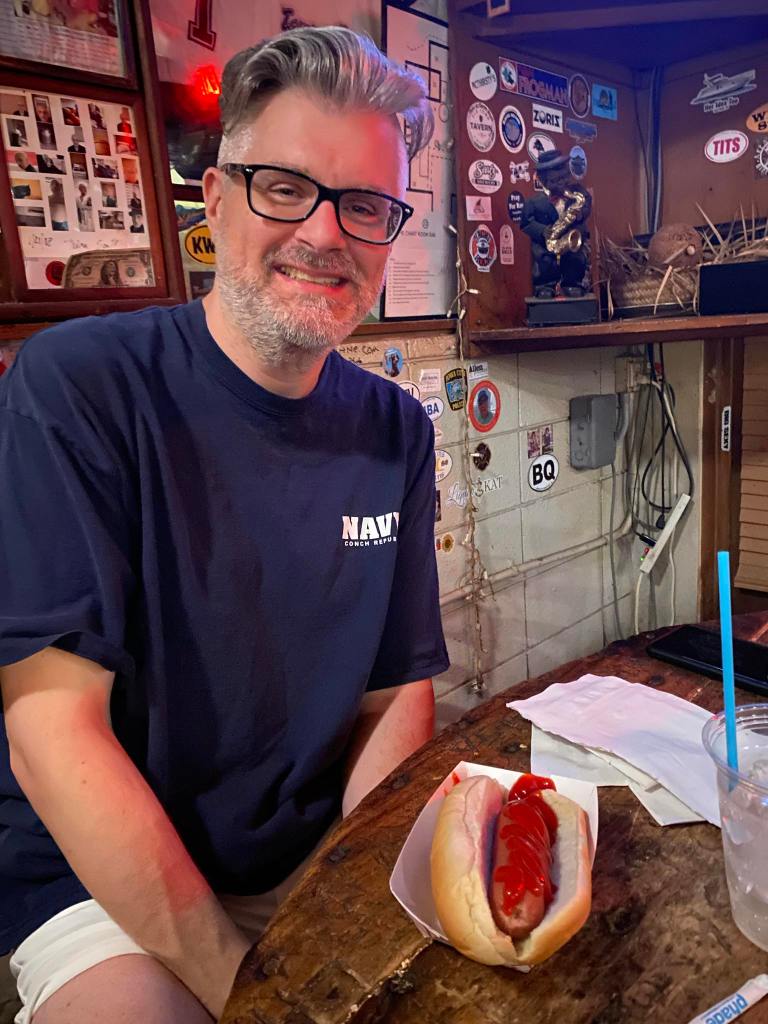
Not just because I’m a June baby, but because to me it’s the purest month, of school ending for the year, unblemished sunshine, freedom and fun and swimming, and so many anniversaries of important events, good and less good. I have a weird possessive sense about June. It’s my month, something that I came to consciously appreciate only when I was older. Also, “Cliches” is about Key West and mentions a lady getting “86’d from The Chart Room.” I’m geeked that our photo still hangs behind the bar amid the thousands that passed through that glorious dingy little watering hole over the decades.
Jimmy Buffett also is an early memory for me. I didn’t grow up listening to his music, and my folks were not Parrotheads (a college girlfriend sorta was), but I do recall hearing radio staples like “Margaritaville” and “Come Monday” while growing up in the Eighties. And there’s one memory, perhaps 1979 or 1980, of me playing on our front porch in suburban Cleveland and “Come Monday” is the song that was coming from our stereo inside the house. I’ve no idea why that memory stuck with me for almost half a century but I can vividly recall my mother being on the long concrete porch with me, my dad washing the car or working in the yard, and the fading sunshine of a late summer day in Ohio.
I came to be a Buffett fan — I do not consider myself a Parrothead because that’s tiresome Boomer shit to me — later in life, maybe my early 40s when I began to understand Buffett’s escapism themes, and after I fell in love with literary Key West. The concept of escapism crystalized in my mind in middle age, as I’m sure it has for millions of others as the petty inconveniences and endless frustrations of living in our American empire’s late-stage capitalism decline began to weigh on me. Thomas Pynchon summed it up well when writing about the American drug trade in his novel “Inherent Vice”:
“Get them coming and going, twice as much revenue and no worries about new customers—as long as American life was something to be escaped from, the cartel could always be sure of a bottomless pool of new customers.”
Think about that. We want to constantly escape to the beach, to the lake, to the mountains, to the woods … why? The hectic pace of middle age doesn’t give us much time to reflect on the thirty-thousand-foot view of our lives and the system in which we live, the system that makes us cogs in an inescapable brutalizing, soulless machine that enriches the few at the expense of the many, forever. But most of us, me in particular, don’t grasp this until we’re locked into the machinery with our literal health and lives dependent on the whims of others. And even escapism is packaged, sold, and marketed to us as part of capitalism’s endless march to more more more profits. Shit, Buffett’s $1.5 billion Margaritaville Inc. branding empire is one of the worst offenders.
(Here’s a link to my 2020 interview with Buffett about how sports were a major part of his life and musical experience, back when I worked at The Athletic/New York Times.)
But I digress … (get used to me doing this often on this site)
One of the blessings of age is that you do begin to recognize things that your younger self was too immature (at least in my case) to grasp. Today also is part of a *new* set of good old days, which we never seem to know in the moment. I recognize that now, even as my body finds fresh ways of reminding me that everything has mostly worked for half a century is wearing out. I don’t write any of this bitterly or blithely, but as life travelogue as I observe it happen to myself. I feel like an anthropologist of my own life – “The unexamined life is not worth living” as Socrates maybe said.
Those that have known me for any real length of time (like thirty seconds) know I’m a cynic – shocker! – and in the case of aging, that cynicism has given me new impetus to live a long time. Why? Because I want to see Gen Z reach middle age and be cast aside by culture, to see the arrogance of youth replaced by the pissy calamities of middle age, the generation-wide realization that society no longer values you as its target demographic. Here’s your Velcro shoes, kids. Hope you enjoy creamed corn.
The Germans call it schadenfreude, which is the pleasure we derive from someone else’s problems. I’m a deeply empathetic person, but I have my limits and when I see and hear youthful discourse today, what comes to mind is the Michael Jordan meme: Fuck them kids.
Yes, I know this is my GET OFF MY LAWN phase, but it’s also really not that serious. More eye-rolling than genuine irritation, until one of them says something outrageously stupid or refers to the 1990s as the “nineteen hundreds.” As they are, I once was. As I am, they will become.
Now, back to my morbid habits. As far back as I can remember, I’ve counted down the days, and I don’t mean toward something desirable. Just the opposite: I count the remaining days while on vacation or as summertime winds down toward school and winter. In my mind, I’m in constant negotiation with myself: “OK, we have a week left here in Myrtle Beach. So much to do! Let’s go to the pool, get hotdogs and Cokes, then the arcade and maybe putt-putt later.” Then it’s five days. Then four. Then it’s the night before leaving, always a bit of a bummer … but at some point, I began to change and look forward to getting home, unpacking, relaxing, getting back to normal. And then preparing for the next adventure.
Returning to Paul Bowles again, he wrote something else in “The Sheltering Sky” that stuck with me:
“Whereas the tourist generally hurries back home at the end of a few weeks or months, the traveler belonging no more to one place than to the next, moves slowly over periods of years, from one part of the earth to another. Indeed, he would have found it difficult to tell, among the many places he had lived, precisely where it was he had felt most at home.”
That’s a mindset I’m envious of and wish for myself, but cannot grasp how one comes to think and feel that way. Probably money, which is the universal lubricant for traveling for however long in luxury, and I’ve come to define luxury as not just the trappings of wealth but the avoidance of the petty bullshit and frustration and humiliations foisted on the masses.
At fifty, I’m happy to go new and familiar places. I am equally content to come home to my own bed and comfortable, familiar surroundings. I’ve lived many places, more than most, and traveled extensively, but I’ve been in Michigan now for 25 years, half my life, and it and the Midwest are home.
Anyway, as I said at the start, there’s nothing particularly insightful in these epiphanies. Billions were born, lived, and died before me, and billions will after I’m burned to ash and rightfully forgotten. The labyrinth of human existence, the long march of our lives, and writing about it … it’s all derivative. Untold numbers of people long before me reached these same conclusions and realizations. Yes, getting old is both a blessing and a curse. I’m still here and so many are not, like my sister. I feel the days in all of my joints, in my gut, in my brain, increasingly with every new day. But I’m still gonna write it down.
How many sunny June days are left to me?
Not enough.
XXX 30 XXX
 Unpaid Bills
Leave a comment